

You searched for cruce perro y mujer. It’s a fascinating and ancient concept, isn’t it?
While this idea appears frequently in myths, legends, and fiction, a biological cross between a human and a dog is not possible.
Our goal here is to explore the scientific reasons why this is impossible and to examine where this powerful idea comes from in our culture and history.
We’ll separate biological fact from cultural fiction, so you can understand the full picture.
The deep bond between humans and dogs might be a source of this mythological curiosity. Let’s dive in.
The Scientific Reasons a Human-Canine Hybrid Can’t Exist
Let’s start with the basics. A species is a group of living organisms that can exchange genes or interbreed. This means they can produce fertile offspring.
Now, let’s talk about the genetic barrier. Humans have 46 chromosomes, while domestic dogs have 78. This fundamental difference in genetic structure is like trying to build a complex machine with two completely different and incompatible sets of blueprints.
It just doesn’t work.
Imagine you have a set of Lego blocks, and I have a set of Duplo blocks. They look similar, but they don’t fit together. That’s what happens when you try to combine human and dog DNA.
There are other reproductive isolating mechanisms too. For example, differences in reproductive cycles and biochemistry make it impossible for the sperm of one species to successfully fertilize the egg of the other.
Some people might still wonder about the cruce perro y mujer. But from a biological and genetic standpoint, a viable offspring between a human and a dog is impossible.
So, if you ever hear someone talking about such a hybrid, you can confidently say it’s not possible. Stick to the science, and you’ll be on solid ground.
Dog-Headed Beings in Mythology and Ancient Legends
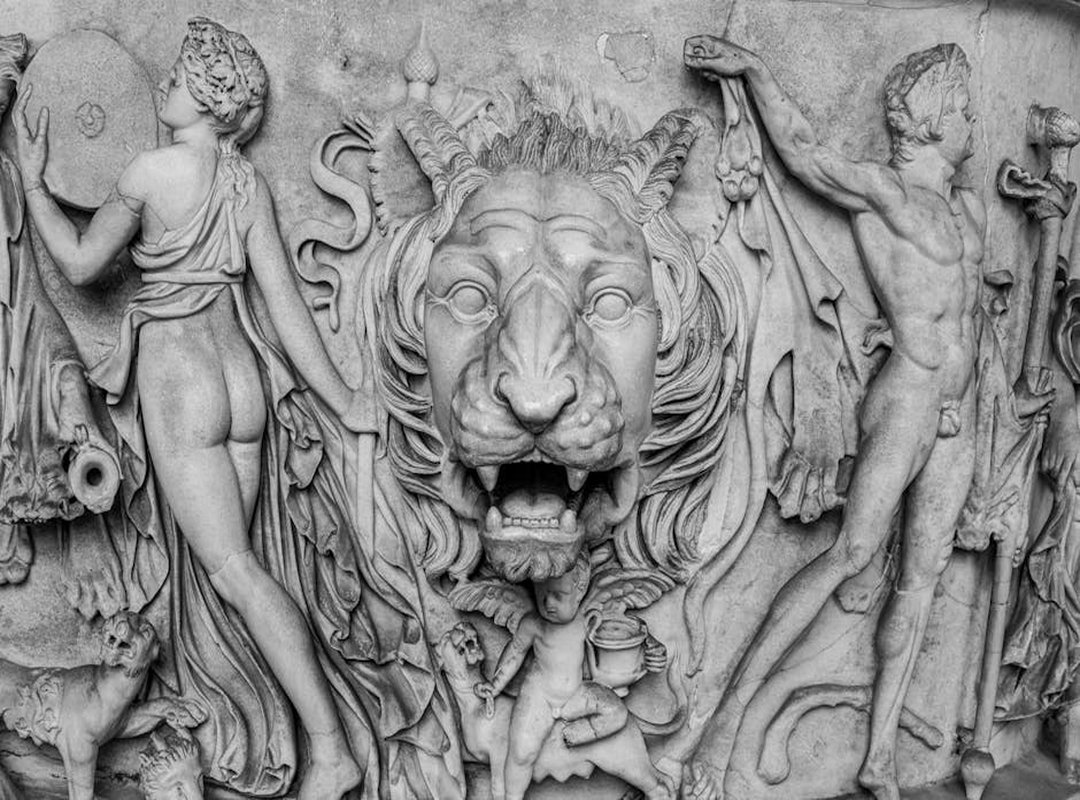
Transitioning from science to culture, it’s clear that the impossibility of dog-headed beings in reality hasn’t stopped humans from imagining them for thousands of years.
Take the Cynocephali, or dog-headed people, a mythical race described in ancient Greek and Roman accounts by writers like Herodotus. These stories often depicted them as fierce and wild, living in far-off lands. Gfxdigitational
In Egyptian mythology, Anubis, the jackal-headed god, is a prominent example. He was associated with death and embalming, symbolizing the guardians of the underworld.
Interestingly, the legend of Saint Christopher sometimes depicts him in Eastern Orthodox traditions as having the head of a dog. This variation adds another layer to the rich tapestry of human-animal hybrids in religious and cultural narratives.
The symbolism behind these myths is varied. They often represent wildness and loyalty. For instance, the cruce perro y mujer might symbolize a blend of human and animal traits, embodying both the untamed and the devoted.
These myths also reflect the ancient fascination with distant, ‘uncivilized’ lands. The Cynocephali, for example, were often seen as inhabitants of the edges of the known world, embodying the fear and curiosity about the unknown.
Understanding these symbols and stories can give us insights into how our ancestors viewed the world and their place in it.
The Human-Dog Hybrid Theme in Modern Fiction and Pop Culture
The idea of a human-dog hybrid, or cruce perro y mujer, has been around for ages. It’s a concept that keeps popping up in our stories and entertainment.
Take the werewolf, for instance. This folklore transforms a human into a wolf-like creature, playing on themes of dual nature and loss of control. It’s a classic example, but it’s not the only one.
In science fiction, we see genetic engineering stories where scientists create humanoid creatures with canine DNA. These narratives often explore the ethical and moral implications of such experiments.
Comic books and video games also feature anthropomorphic dog characters. These characters often have human-like traits, allowing us to explore a range of emotions and behaviors through a different lens.
Why does this theme remain so popular? It allows us to delve into our own animal instincts and our relationship with nature. It also challenges the boundaries of what it means to be human.
We’re fascinated by the idea of blending two worlds, and these stories give us a way to explore that fascination.
Why We Are Fascinated by the Human-Animal Connection
A human-dog cross is a biological impossibility but a powerful and enduring cultural idea. This concept’s prevalence in myths and stories stems from our deep, long-standing relationship with dogs as companions, protectors, and partners. These hybrid myths are a symbolic way of exploring the traits we share with or admire in dogs, such as loyalty, ferocity, and intuition.
While the physical cruce perro y mujer is fiction, the emotional and historical bond between humans and dogs is a profound reality worth celebrating. Mythology helps us understand our own psychology and our place in the natural world.
 There is a specific skill involved in explaining something clearly — one that is completely separate from actually knowing the subject. Josephs Cessnatics has both. They has spent years working with emerging tech trends in a hands-on capacity, and an equal amount of time figuring out how to translate that experience into writing that people with different backgrounds can actually absorb and use.
Josephs tends to approach complex subjects — Emerging Tech Trends, Expert Perspectives, Software Development Insights being good examples — by starting with what the reader already knows, then building outward from there rather than dropping them in the deep end. It sounds like a small thing. In practice it makes a significant difference in whether someone finishes the article or abandons it halfway through. They is also good at knowing when to stop — a surprisingly underrated skill. Some writers bury useful information under so many caveats and qualifications that the point disappears. Josephs knows where the point is and gets there without too many detours.
The practical effect of all this is that people who read Josephs's work tend to come away actually capable of doing something with it. Not just vaguely informed — actually capable. For a writer working in emerging tech trends, that is probably the best possible outcome, and it's the standard Josephs holds they's own work to.
There is a specific skill involved in explaining something clearly — one that is completely separate from actually knowing the subject. Josephs Cessnatics has both. They has spent years working with emerging tech trends in a hands-on capacity, and an equal amount of time figuring out how to translate that experience into writing that people with different backgrounds can actually absorb and use.
Josephs tends to approach complex subjects — Emerging Tech Trends, Expert Perspectives, Software Development Insights being good examples — by starting with what the reader already knows, then building outward from there rather than dropping them in the deep end. It sounds like a small thing. In practice it makes a significant difference in whether someone finishes the article or abandons it halfway through. They is also good at knowing when to stop — a surprisingly underrated skill. Some writers bury useful information under so many caveats and qualifications that the point disappears. Josephs knows where the point is and gets there without too many detours.
The practical effect of all this is that people who read Josephs's work tend to come away actually capable of doing something with it. Not just vaguely informed — actually capable. For a writer working in emerging tech trends, that is probably the best possible outcome, and it's the standard Josephs holds they's own work to.