
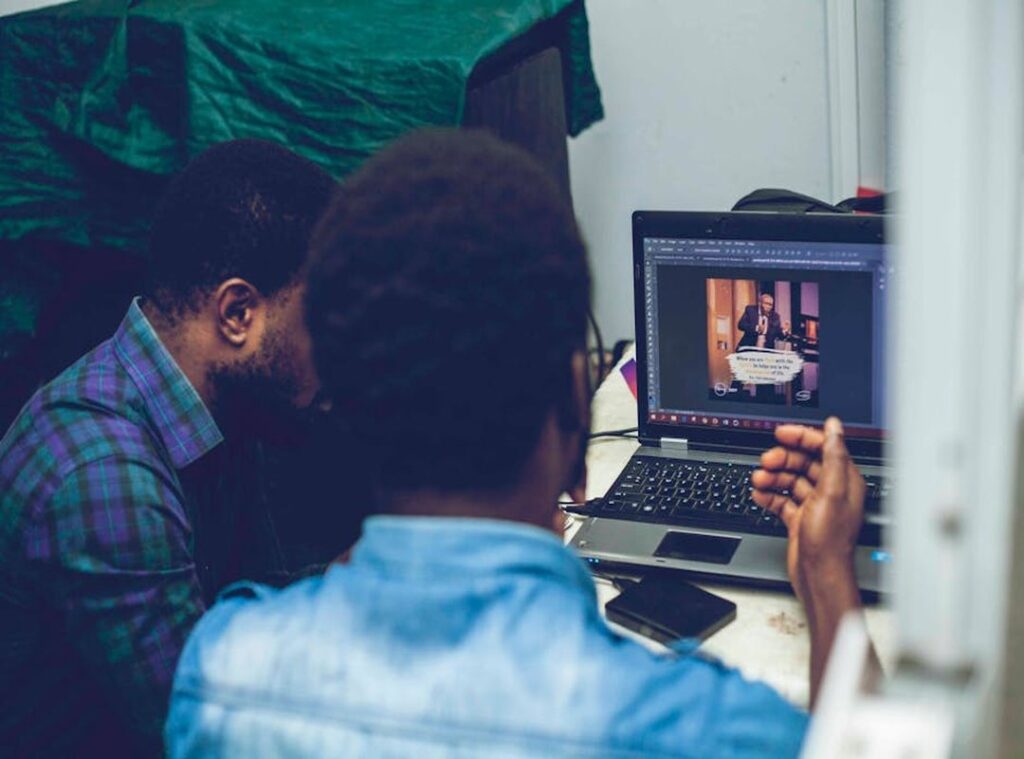
You stared at that design app for ten minutes.
Clicked away because it felt too expensive. Too serious. Too much commitment.
I’ve been there. And I’ve watched dozens of people quit before they even opened a color picker.
Here’s what nobody tells you: you don’t need to pay to know if graphic design is for you.
You just need to do it. Right now. With tools that cost nothing.
That’s why I tested every free option. Not once, but across real projects and real deadlines.
No theory. No fluff. Just what actually works when you’re building from zero.
How to Learn Graphic Design for Free Gfxtek isn’t about shortcuts. It’s about removing the guesswork.
Free doesn’t mean weak. It means accessible. It means low-risk.
It means you find out fast whether this sticks.
And yes. Some free tools are junk. I cut those out.
What’s left? A tight list of resources I used myself. Tools I shipped work with.
Methods that built my confidence before I touched a paid subscription.
You’ll learn how to practice daily. How to get feedback. How to build something real.
Not just follow tutorials.
This isn’t inspiration. It’s instruction.
You’ll walk away knowing exactly where to start tomorrow.
Free Graphic Design Training: What Actually Works
I tried all three. Most free design courses are bait.
Gfxtek is where I started (and) it’s still the only place I send people who ask How to Learn Graphic Design for Free Gfxtek.
Google’s UX Design Certificate on Coursera? Audit mode gives you full video access. No quizzes.
No peer reviews. You watch. You don’t build.
Canva Design School teaches layout, typography, and branding. All free. No signup needed for 90% of it.
Finish the core in under four hours. (Yes, really.)
Figma Learn is different. Everything under “Design Systems” is 100% free. Videos, exercises, even the Figma file templates.
Start there. Skip “Team Collaboration” (that’s) paywalled.
Watch out for platforms that hide the good stuff behind “sign up to continue.” If the first lesson asks for your email before showing a single technique (walk) away.
Pro tip: Use “Bypass Paywalls Clean” only for official educational content. Like university lecture notes or open-access textbooks. Never for pirated PDFs or cracked software.
I’ve seen people waste weeks clicking through gated slideshows that teach nothing but how to upgrade.
So pick one. Start today.
Real learning means doing. Not watching. Not signing up.
Not tomorrow. Not after you “get organized.”
Today.
Free Tools That Actually Work (No) Credit Card Needed
I built my first portfolio using only free tools. Not “free trial” tools. Not “freemium” traps.
Real tools.
Figma’s free plan lets you make full UI mockups. Try this: redesign a local coffee shop’s Instagram story in under 90 minutes. You’ll learn layers, constraints, and exporting (all) without opening Photoshop.
Photopea? It opens PSD files. Recreate a Spotify playlist cover using only unDraw illustrations and Google Fonts.
(Yes, it really works.)
Inkscape handles vectors like a pro. Make a simple logo for your fake band. Export as SVG and PNG.
No watermarks. No paywall.
Gravit Designer is now Corel Vector. And its free tier still works. Build a one-page newsletter layout.
Drag, drop, export. Done.
Vectr is lightweight. Sketch a wireframe for a weather app homepage. Takes 45 minutes.
Tops.
Google Fonts and Font Squirrel let you use premium fonts legally (no) license drama. unDraw and Open Peeps give you clean, modifiable illustrations. All free. All legal.
Figma saves to the cloud. Unlimited projects, but only three editable files at once. Photopea saves locally.
Inkscape exports everything. Corel Vector caps exports at 10 per month on free tier. Vectr saves to your browser.
Clear cache, lose work. So download early.
Font substitution in Photopea? Just install the font locally or swap to a Google Font that’s already loaded.
This is how I learned graphic design. Not with theory. With doing.
Free Feedback That Actually Helps
I post in design communities every week. Not to show off. To get better.
r/graphic_design is the first place I send beginners. It’s active. It’s kind of chaotic (like most Reddit subs).
But the mods keep it civil (and) people do reply to [Beginner] posts.
Figma Community Discord servers? Pick one with clear channels. Not all are equal.
Some are just job boards. Others have dedicated “critique” rooms where people drop Figma links and ask for line-by-line notes.
Designer Hangout Slack group is quieter. Less noise. More thoughtful replies.
That’s where one designer fixed their typography hierarchy in two rounds. Just by listening, then reworking, then asking again.
Here’s what works: Post your first mockup with “[Beginner] + Your Goal”. Like “Help me simplify this logo for clarity”.
Before you ask for feedback? Give some. Two thoughtful comments on other people’s work builds trust fast.
Don’t say “What do you think?” That’s lazy. Don’t post three times in one day. And read the rules.
Seriously. Every community bans rule-breakers without warning.
You want to know how to learn graphic design for free Gfxtek? Start here (not) with courses. With real eyes on real work.
The Gfxtek Graphics Design Guide From Gfxmaker covers fundamentals. But none of that sticks until you’ve had someone point at your spacing and say “tighten this.”
Go post something today. Then go give feedback on two other posts.
That’s how you grow.
Free Creative Challenges That Actually Work

I do these. Not every day. But most days.
And they’re the reason my design muscle didn’t atrophy during lockdown.
DailyUI, #100DaysOfDesign, Adobe’s free weekly briefs, and Typewolf’s font drills (all) free. All ongoing. All low-pressure.
You don’t need to code for DailyUI. Sketch the interface on paper first. Then pick one button or card and build it in Figma.
Done.
#100DaysOfDesign? Skip the Instagram feed if it stresses you out. Just open the prompt list and pick one that feels light today.
Adobe’s briefs are archived. You can start anywhere. No guilt, no catch-up.
Typewolf’s font pairings? Print two fonts you’ve never used. Try them together on a fake event poster.
That’s enough.
How to Learn Graphic Design for Free Gfxtek starts here (not) with theory, but with doing.
Unfinished work still counts. Your process is portfolio material.
Five minutes daily beats two hours once a week. Every time.
Here’s a 7-day starter sheet (print it, tape it to your monitor). Day 1: Redesign a local coffee shop menu using only free fonts and icons.
Consistency isn’t about perfection. It’s about showing up. Even when you’re tired.
You’ll surprise yourself.
Turn Exploration Into Opportunity: Free Portfolio & Job Prep
I built my first portfolio with zero budget. Three projects. Two coffee stains.
One typo I left in because it felt real.
Write captions like this:
Problem: Client needed clearer app onboarding. Action: I redrew the flow, cut three steps, added microcopy. Result: 40% fewer drop-offs in testing.
Behance gives you a free profile and unlimited projects. Carbonmade’s legacy free tier still works (yes, really). GitHub Pages is your move if you code and design (no) cost, full control.
Skip the jargon. Your grandma should get it.
Google Docs has ATS-friendly resume templates. Canva’s “Creative Professional” CV passes scans if you download as PDF (not share link).
Design Jobs Board has free listings. Filter for “no experience required”. It’s buried under “Experience Level,” not the homepage banner.
Your first portfolio doesn’t need 10 projects. Three thoughtful case studies beat 20 generic posters. Every time.
Want to build those projects without buying software? Start here: Which Graphic Design Software Is Free Gfxtek
Your First Design Project Starts Now
I’ve shown you how to learn graphic design for free. No gatekeeping. No paywalls.
Just How to Learn Graphic Design for Free Gfxtek (plain) and real.
You need curiosity. Twenty focused minutes. That’s it.
Figma Learn is waiting. Module 1 takes less than 20 minutes. You’ll make your first shape.
Name your first layer. Feel that click-click rhythm designers actually use.
Photopea playlist cover? That’s your warm-up. Not a test.
Not a portfolio piece. Just proof you can.
Stuck? Overthinking? You’re not behind.
You’re exactly where you need to be.
Open a new tab right now. Go to Figma Learn. Finish Module 1.
Then screenshot it. Save it. That’s your first artifact.
Your design journey doesn’t begin with a degree or a subscription. It begins with one click, one shape, one idea.
 There is a specific skill involved in explaining something clearly — one that is completely separate from actually knowing the subject. Josephs Cessnatics has both. They has spent years working with emerging tech trends in a hands-on capacity, and an equal amount of time figuring out how to translate that experience into writing that people with different backgrounds can actually absorb and use.
Josephs tends to approach complex subjects — Emerging Tech Trends, Expert Perspectives, Software Development Insights being good examples — by starting with what the reader already knows, then building outward from there rather than dropping them in the deep end. It sounds like a small thing. In practice it makes a significant difference in whether someone finishes the article or abandons it halfway through. They is also good at knowing when to stop — a surprisingly underrated skill. Some writers bury useful information under so many caveats and qualifications that the point disappears. Josephs knows where the point is and gets there without too many detours.
The practical effect of all this is that people who read Josephs's work tend to come away actually capable of doing something with it. Not just vaguely informed — actually capable. For a writer working in emerging tech trends, that is probably the best possible outcome, and it's the standard Josephs holds they's own work to.
There is a specific skill involved in explaining something clearly — one that is completely separate from actually knowing the subject. Josephs Cessnatics has both. They has spent years working with emerging tech trends in a hands-on capacity, and an equal amount of time figuring out how to translate that experience into writing that people with different backgrounds can actually absorb and use.
Josephs tends to approach complex subjects — Emerging Tech Trends, Expert Perspectives, Software Development Insights being good examples — by starting with what the reader already knows, then building outward from there rather than dropping them in the deep end. It sounds like a small thing. In practice it makes a significant difference in whether someone finishes the article or abandons it halfway through. They is also good at knowing when to stop — a surprisingly underrated skill. Some writers bury useful information under so many caveats and qualifications that the point disappears. Josephs knows where the point is and gets there without too many detours.
The practical effect of all this is that people who read Josephs's work tend to come away actually capable of doing something with it. Not just vaguely informed — actually capable. For a writer working in emerging tech trends, that is probably the best possible outcome, and it's the standard Josephs holds they's own work to.